
Poiana Stânii Regale hike from Sinaia
Above Sinaia, a forest path leads to Poiana Stânii Regale, a meadow linked to the town’s royal past. Choose your route carefully and leave enough daylight for the walk back.
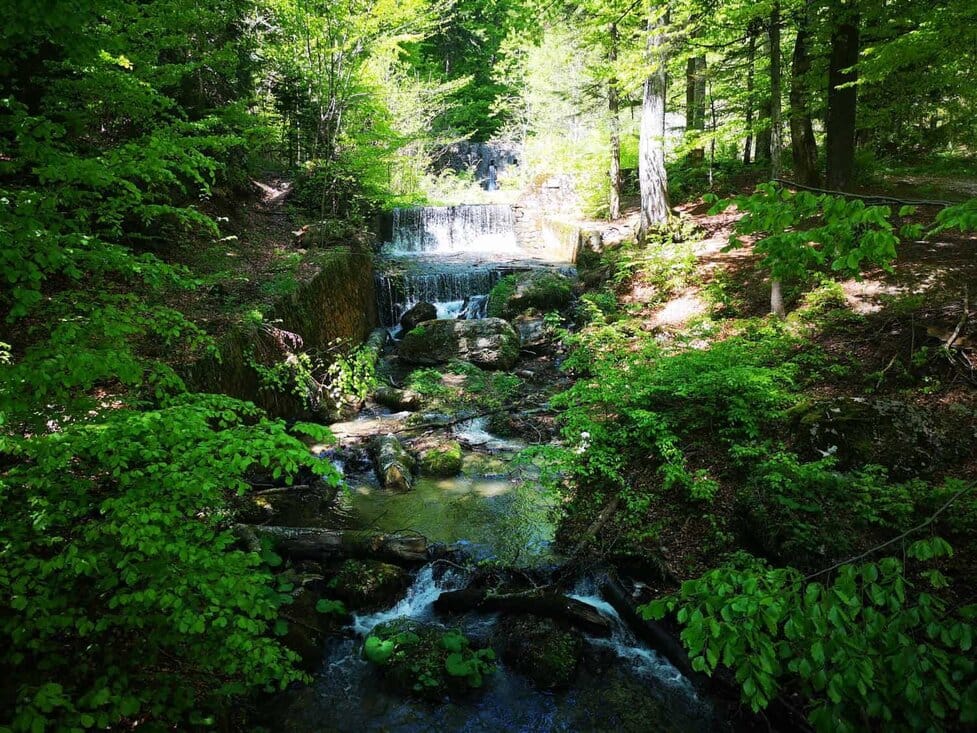
The royal meadow above Sinaia
Poiana Stânii Regale is one of the best places to appreciate the quieter forest landscape above Sinaia. The name refers to a meadow associated with the royal estate, reached by paths through the lower Bucegi slopes. The walk has a very different atmosphere from the town’s castle courtyards or the open alpine scenery around Cota 2000: tall trees, changing light, a sense of distance from traffic and the satisfaction of arriving at a clearing.
It is sometimes advertised as an easy walk, but that description needs care. The route involves sustained uphill sections, uneven ground and enough distance to tire an occasional walker. A trip from Sinaia railway station adds the climb through town before the forest walking begins. Someone who is comfortable strolling around Dimitrie Ghica Park may still find the ascent demanding.
For travellers who already know Peleș Castle, the Royal Path offers a natural way to extend the story of Sinaia beyond museum rooms. Plan it as a proper half-day hike with a safe return, not as a short shortcut between two central attractions.
Why the path is called royal
The route known as Poteca Regală is linked historically with the royal estate in Sinaia. Accounts of the area describe an older path improved with paving and balustrades, connecting the royal quarter with the meadow. The atmosphere remains one of the route’s attractions: you pass through forest rather than following the main resort streets, and the approach feels separate from the more formal surroundings of the castles.
That historical association does not make the path a manicured palace garden today. Stone surfaces wear, branches fall and sections can become damaged or slippery. A wooden rail visible in an old photograph may no longer be intact. Follow current markings and local instructions rather than trusting the route to look exactly as a ten-year-old travel diary describes it.
There are different ways to approach the meadow, and a complete walk from town is not identical to an excursion that begins closer to the forest. Distinguish between these options before relying on a quoted distance or time. The royal history adds interest, but practical route planning should come first.
The marked approach from Sinaia
A frequently described route leaves the central Sinaia area, climbs past the monastery and royal quarter, and continues towards the forest path marked with a blue stripe. Other itineraries use the area known as Vulpărie as a starting point. The Bucegi Natural Park lists a thematic itinerary Vulpărie – Poteca Regală – Poiana Stânei – Drumul Cotei – Cota 1400 at 6.17 kilometres and approximately 2½ hours, classified easy to average.
That official figure is for the park’s defined itinerary, not necessarily the whole trip from your hotel or railway station. A route from Sinaia station to the meadow can be longer because the urban approach adds distance and ascent. Check the actual GPX and the signboard at your chosen start. An old map that joins several segments may also hide an unexpected uphill stretch.
Where the path divides, stop and check the next marker. Do not follow an inviting unmarked shortcut through the forest simply because it appears to climb in the right direction. Turning back on the confirmed route is better than continuing into terrain you do not recognise.
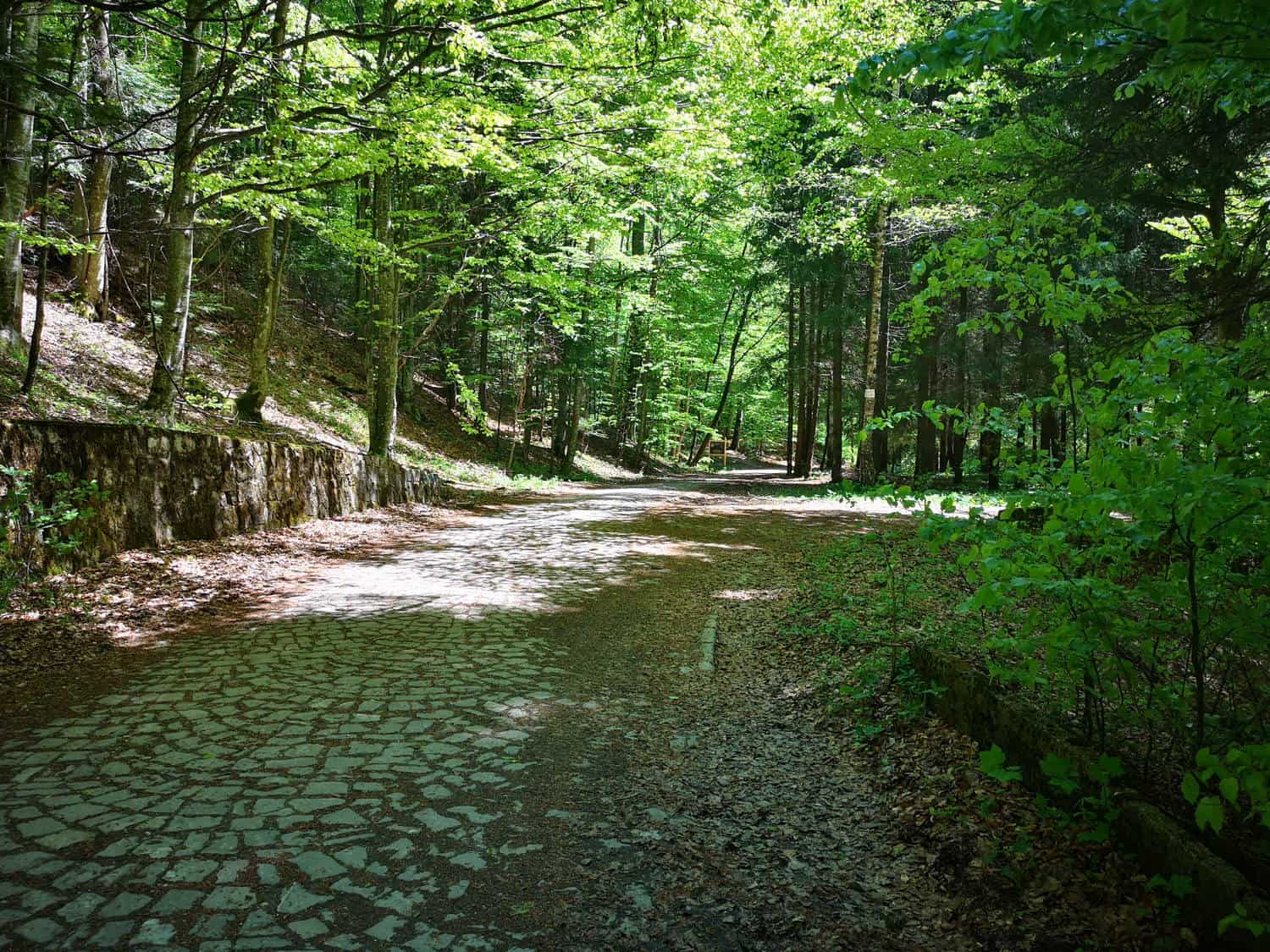
What the walking surface is really like
The Royal Path is associated with old stone paving and forest walking. That can be pleasant in dry weather, but uneven stones and roots are not the same as an accessible urban pavement. Wear hiking shoes with traction, especially when it has rained. The effort comes from the climb as much as from technical difficulty; even without exposed scrambling, a steady uphill route takes energy.
Allow for breaks on the ascent. Some visitors describe the walk as gentle because it is less technically demanding than higher Bucegi routes, while others find it tiring because the gradient continues for a substantial period. Both experiences can be valid. Choose a pace that suits the slowest person in the group, carry enough water and do not assume that a café or shop will be open at the meadow.
Keep an eye on fallen branches, unstable edges and slippery ground after storms. In colder months, ice can form on stone surfaces in shaded places even when central Sinaia appears dry. A summer difficulty label is not a winter guarantee.
Arriving in Poiana Stânii Regale
The meadow offers a change of scene after the trees. Depending on the weather and your exact position, you may enjoy views towards the surrounding mountains and the open character of the landscape. Give yourself time to look around rather than immediately starting another ascent. A short rest, water and something to eat may be the most enjoyable part of a walk that has taken real effort.
Some nearby facilities and properties are mentioned in older travel accounts, but do not assume they are open, staffed or able to serve meals during every season. If you intend to eat at a specific mountain venue, confirm its current programme. Carry your own water and snacks so that the hike does not depend on arriving at a working restaurant.
Respect the meadow and woodland. Stay on established routes, take all litter back, avoid disturbing grazing animals or wildlife and do not leave food behind. An attractive clearing can be damaged quickly when visitors treat it as an unrestricted picnic ground.
Adding Stâncile Franz Josef
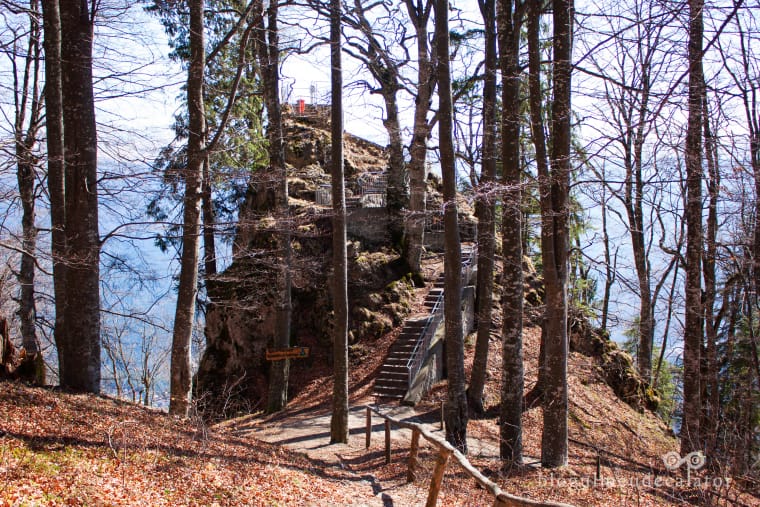
The Franz Josef Rocks are a nearby viewpoint often associated with the Poiana Stânii area. They offer a different reward from the meadow itself: a view across the Prahova valley rather than only the surrounding forest and open grassland. The rocks have their own history and visitor considerations, including the need to respect any stairs, railings and restricted areas.
Do not assume every visitor to the meadow should automatically climb onto a rocky ledge. If the approach is wet, icy or unsuitable for someone in your group, skip the viewpoint. Keep children close, follow designated access and avoid stepping beyond barriers for a photograph. The surrounding terrain is natural, and an impressive view is not worth a fall.
Our Franz Josef Rocks guide covers that stop separately. Reading it before departure helps decide whether the viewpoint fits your walking ability, available daylight and weather conditions.
Spring, summer, autumn and winter
Spring brings fresh forest growth but may leave patches of mud, cold shaded ground and water across the path. In summer the trees provide welcome shade, although thunderstorms can build quickly in the afternoon. Early starts are particularly pleasant when you want a leisurely return to town before the hottest part of the day.
Autumn gives the forest its richest colours and often cooler walking temperatures. The trade-off is shorter daylight, slippery leaves and the possibility of sudden rain. A departure late in the afternoon may leave too little time to return before dark. Carry a headlamp even when you plan to finish during daylight.
Winter changes the route substantially. Snow or ice can hide markings and make the stone path dangerous without appropriate equipment and local advice. Do not rely on a description of the hike as easy or moderate during the snow-free season. Check current route conditions with park and mountain rescue sources before leaving.
Can families and beginners walk the route?
Fit beginners may find the Royal Path a rewarding first forest hike, but it is not a stroller walk and it should not be presented as effortless for all ages. Children who are accustomed to walking on uneven paths may enjoy it in dry conditions, provided adults plan enough time and breaks. For a child who becomes tired after a short town walk, a full ascent to the meadow may be too ambitious.
Check the actual start. Beginning at a higher access point can change the amount of climbing, while walking from the station adds a longer urban approach. A family should agree on a turnaround rule before setting out. If the slowest member is uncomfortable, go back on the marked route rather than insisting on reaching the clearing.
For visitors with reduced mobility, the old paving, slopes and natural terrain require specific assessment. A route described as a royal path is not necessarily wheelchair-accessible. Ask local services about easier alternatives around Sinaia instead of assuming the historic name implies modern access facilities.
Wildlife and mountain safety
The forest is part of the Bucegi mountain environment, where wildlife—including bears—is present. Stay on marked trails, keep food packed away and do not approach or feed animals. Travel in a group when practical and keep dogs controlled. An animal seen from a distance should be given space rather than followed for a photograph.
Carry a map, a charged phone, water, weather-appropriate layers and a small emergency kit. Tell someone where you intend to walk and when you expect to return. If a trail is closed or a rescue service advises against it, change plans. For a serious emergency call 112; the national Salvamont dispatcher also operates through 0725 826 668.
Do not regard a short distance from a resort as proof of constant mobile reception or immediate help. Mountain terrain can complicate navigation and access. A sensible walking day includes a safe descent and time to return to town before darkness.
Returning to Sinaia without improvising
Decide how you will descend before leaving the town. The simplest plan for many visitors is to return on the same marked route. Alternatives may be possible, but a loop shown on a map can include additional climbing and different surfaces. Do not extend the hike towards Cota 1400 solely because you can see a road or lift station on the map.
If you plan to finish near the mountain road or another access point, check transport arrangements carefully. A bus, taxi or cable car may not be running when you arrive, and you should not assume that every roadway has a safe pedestrian shoulder. In bad weather, returning along the known trail may be preferable to searching for a new exit.
For a trip from Bucharest, leave enough time to walk down into Sinaia and reach the correct railway platform. A comfortable hike followed by a rushed last kilometre to the station is an avoidable mistake. See our Sinaia rail day-trip guide for the wider journey.
Route references
The park’s thematic route and the longer route from the railway station are different itineraries. Use the map for your chosen start.