
Sinaia Monastery, Romania: history, museum and visitor guide
Planning to visit Sinaia Monastery in Romania? The historic Orthodox complex gave the town its name and includes the 17th-century Old Church, the Great Church and a religious-art museum. This guide covers its history, museum hours, what to see and how to combine the monastery with nearby Peleș Castle.
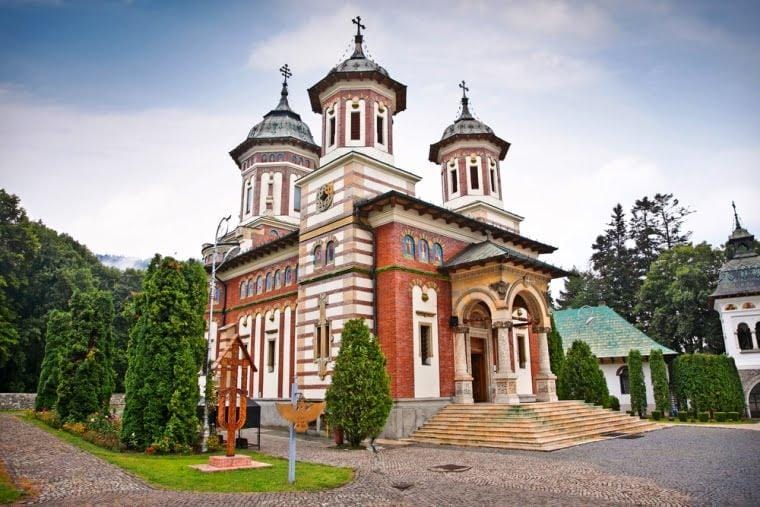
What to know about Sinaia Monastery
Where it is
Strada Mănăstirii 2, between central Sinaia and the uphill route toward Peleș Castle.
Founded
The original monastery complex was built between 1690 and 1695 by Mihail Cantacuzino.
Why it matters
The monastery gave Sinaia its name and predates the development of the modern resort town.
Museum
The complex includes a religious-art museum with historic books, icons, textiles and church objects.
Combine it with
Peleș Castle, Pelișor Castle, Sinaia Casino and the historic centre.
The museum collection is currently listed as 10:00–17:00 in summer and 10:00–15:00 in winter, on request. The database was last updated on 30 June 2026. The monastery itself is an active place of worship, so church access and museum access should not be treated as the same timetable.
This is a visitor guide to Sinaia Monastery as an individual historic and religious attraction. It does not replace the wider Sinaia guide, the dedicated Peleș pages or a religious-service calendar.
- For the whole town: Sinaia travel guide
- For the royal estate: Peleș Castle and Pelișor Castle
- For a one-day route: one day in Sinaia
- For food and overnight stays: restaurants and accommodation in Sinaia
Why Sinaia Monastery gave the town its name
Mihail Cantacuzino founded the monastery after a pilgrimage that included Mount Sinai. The new Wallachian monastery took the name “Sinaia”, and the settlement that later developed around it adopted the same name.
The original complex dates from 1690–1695. As the community expanded, a new courtyard and a larger church were added in the 19th century. The monastery later became closely connected with the Romanian royal family during the years when Peleș Castle was being built nearby.
Mihail Cantacuzino founds the original monastery and Old Church after his pilgrimage to Mount Sinai.
The Great Church / Holy Trinity Church is built in the newer courtyard as the monastic community expands.
The National Heritage Institute records that King Carol I and Queen Elisabeth used rooms in the monastery complex during summers while construction of Peleș Castle was supervised nearby.
Major work reshapes the Great Church, bringing together Brâncovenesc and Moldavian architectural influences.
The complex remains both an active Orthodox monastery and a cultural site with a museum collection.
What you can see at Sinaia Monastery
The monastery is not a single church. The visit makes more sense when you distinguish the old courtyard from the newer part of the complex and leave time for both architecture and museum heritage.
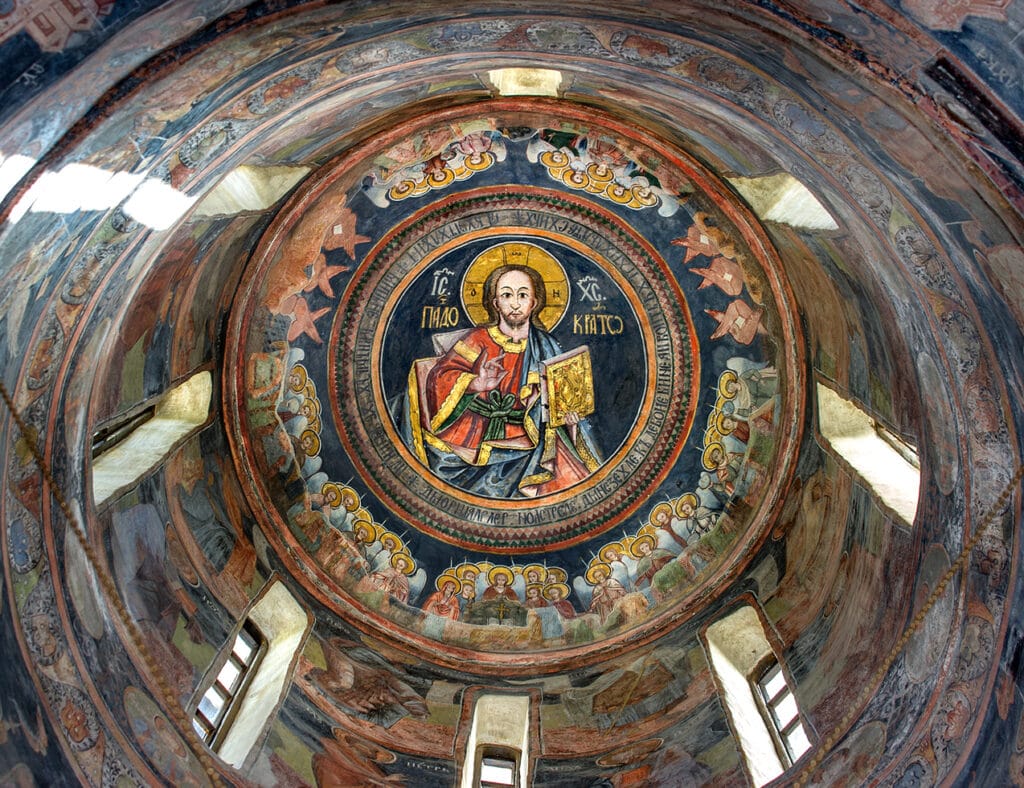
The Old Church
The Old Church belongs to the original late-17th-century foundation and is one of the strongest places in Sinaia to see Brâncovenesc religious architecture. Historic painting associated with Pârvu Mutu survives in the church and has undergone restoration.
- Brâncovenesc architecture — carved stonework, porch and decorative detail characteristic of Wallachia.
- Historic painting — the old church preserves painting associated with Pârvu Mutu.
- Original monastic courtyard — the oldest part of the complex and the clearest link to the 1690s foundation.
The Great Church
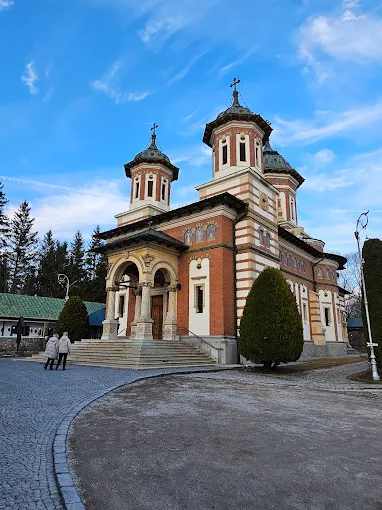
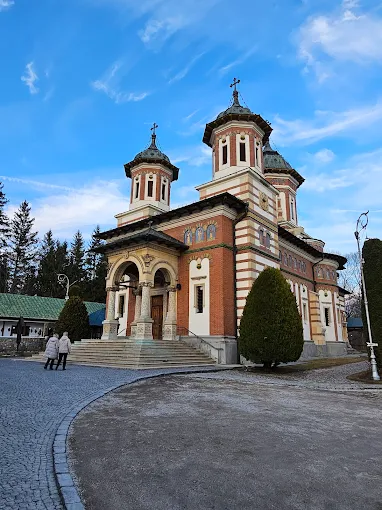
The larger Holy Trinity Church belongs to the 19th-century expansion of the monastery. Its present appearance reflects later rebuilding and a mixture of Brâncovenesc and Moldavian influences.
- Royal connections — the church and monastery are tied to the period when the Romanian royal family stayed in Sinaia.
- Take Ionescu — the statesman and former prime minister is buried within the monastery complex.
- Different scale — the Great Church contrasts strongly with the more intimate Old Church.
Religious art, books, icons, textiles, paintings and church objects from the monastery’s historic collections.
The heritage database records a substantial collection of old volumes alongside icons and liturgical objects.
A political and historical layer that extends the visit beyond church architecture alone.
The transition between the old and new precincts helps explain how the monastery developed over time.
Sinaia Monastery Museum
The National Heritage Institute lists the Sinaia Orthodox Monastery Museum Collection as a religious-art museum at Strada Mănăstirii 2. Its holdings include old books, vestments, paintings, icons, furniture, metalwork and other church objects.
The same database records almost 600 movable heritage objects and notes the museum’s historic connection with rooms once used by King Carol I and Queen Elisabeth.
Because museum access has its own schedule, do not assume that entering the monastery grounds automatically means the museum is open.
Opening hours, museum access and respectful visiting
Sinaia Monastery is an active Orthodox religious community, so a tourist visit should remain secondary to worship and monastery life. Current service schedules, temporary restrictions and museum access can change independently.
Monastery complex
Do not rely on a copied third-party timetable for the churches. Check the monastery locally or through its current official channels before a visit that depends on a specific hour.
Museum collection
The National Heritage Institute currently lists 10:00–17:00 in summer and 10:00–15:00 in winter, on request. Its database entry was updated 30 June 2026.
Photography
Follow the rules posted on site. Churches and liturgical spaces can have different photography restrictions from the courtyards.
Visiting etiquette
Dress and behave respectfully in an active place of worship. Keep voices low, avoid interrupting services, and follow any instructions displayed at church entrances or given by monastery staff.
How to reach Sinaia Monastery
The monastery is close enough to central Sinaia to fit naturally into a car-free day. From Sinaia railway station, the route climbs toward the historic centre and monastery before continuing farther uphill toward the Peleș Royal Estate.
By train
Travel to Sinaia on the Bucharest–Brașov corridor and continue through town on foot or by local transport.
On foot in Sinaia
The monastery works well between the station/centre and Peleș, but remember that Sinaia is hilly.
By car
Use the Sinaia road network from DN1 and allow extra time for parking and weekend congestion.
What to combine with Sinaia Monastery
The monastery sits between the royal-estate side of town and central Sinaia, so it is one of the easiest cultural stops to combine without unnecessary transfers.
Plan the rest of your Sinaia visit
If the monastery and royal estate are central to your trip, choose accommodation and restaurants according to the route you will actually walk. The centre, station and Peleș side of town offer different trade-offs.
Sinaia Monastery in pictures
Frequently asked questions about Sinaia Monastery
Why is Sinaia Monastery important?
It is the oldest major historic foundation in the modern town and gave Sinaia its name. The complex also preserves important religious architecture, art and links with the Romanian royal family.
When was Sinaia Monastery built?
The original monastery and Old Church date from 1690–1695. The Great Church belongs to the 19th-century expansion and was later substantially rebuilt.
Who founded Sinaia Monastery?
Mihail Cantacuzino founded the monastery after a pilgrimage that included Mount Sinai. The monastery’s name was later adopted by the town of Sinaia.
What can I see at Sinaia Monastery?
The main visit includes the Old Church, the Great Church, the two monastic precincts, historic painting, Take Ionescu’s tomb and the monastery museum when it is open.
What are the museum opening hours?
The National Heritage Institute database, updated 30 June 2026, currently lists the museum collection as 10:00–17:00 in summer and 10:00–15:00 in winter, on request. Check again before travel.
Can I combine Sinaia Monastery with Peleș Castle?
Yes. They fit naturally into the same Sinaia day. The monastery is lower in town, while the royal estate is farther uphill. See our Peleș Castle guide before fixing a timed castle entry.
Can I visit Sinaia Monastery without a car?
Yes. Sinaia has a railway station on the Bucharest–Brașov corridor, and the monastery can be included in a walking day through the historic part of town. Expect uphill sections.