
Traditional Romanian food in Prahova Valley
Traditional Romanian food is one of the pleasures of a visit to Prahova Valley. From ciorbă and bulz to sarmale and papanași, here’s what you can expect to find on local menus.
What to expect when eating in the valley
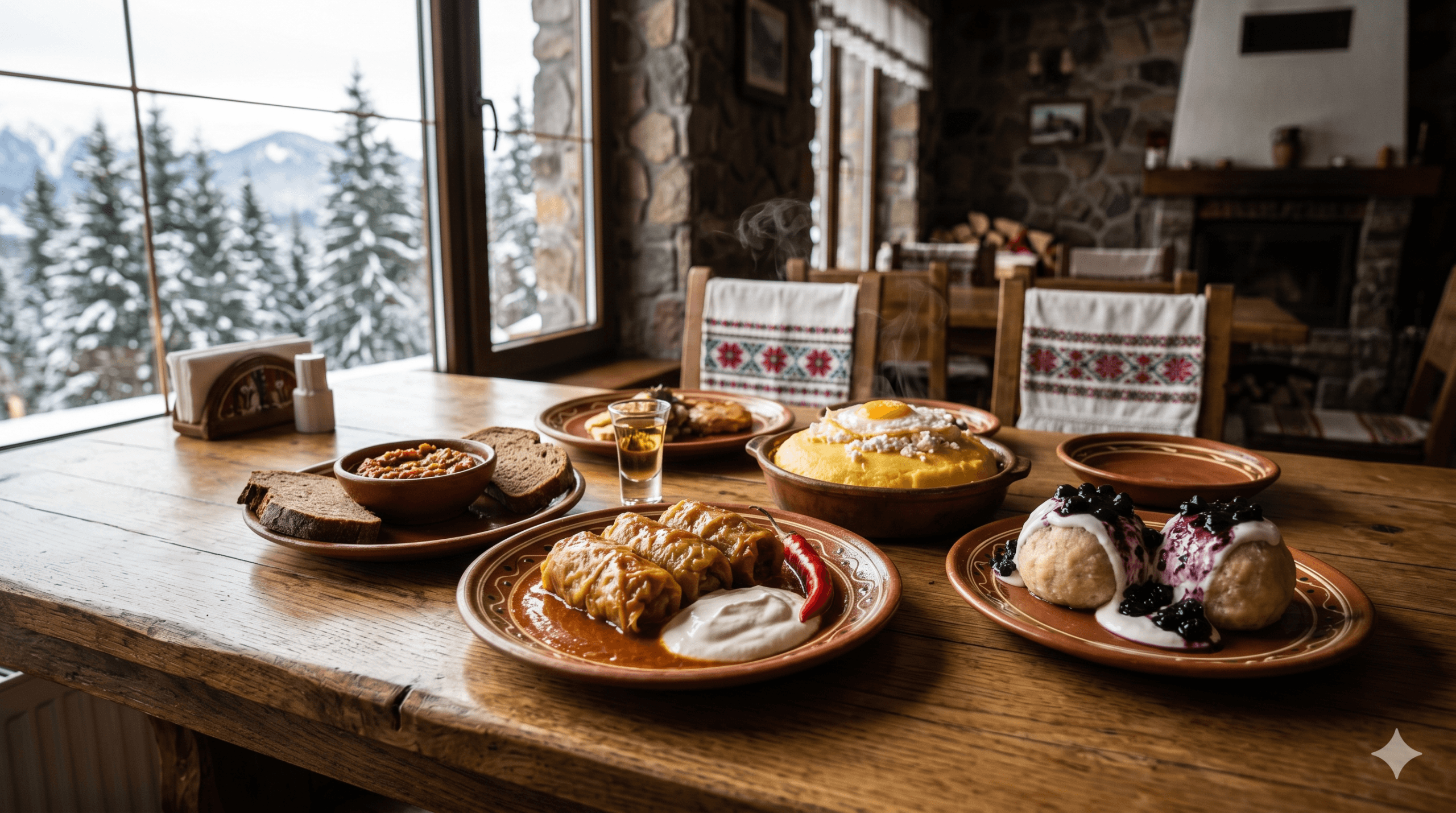
Traditional food is one of the pleasures of a stay in Prahova Valley, especially after a long walk or a cold day outside. You will see dishes associated with Romanian home cooking alongside grilled meat, pizza and more contemporary restaurant menus. The mountains influence the atmosphere of the meal, but not every dish on a local menu originated in the mountains. A good restaurant serves its own interpretation of a much wider national food tradition.
The most useful words to recognise are ciorbă, meaning a sour or tangy soup; mămăligă, a cornmeal dish; brânză, cheese; and smântână, a cultured cream commonly served alongside both savoury and sweet food. Sarmale are filled cabbage rolls. Papanași are a rich dessert. Knowing those few names makes an unfamiliar menu far easier to understand.
Food should be part of the travel plan, not an afterthought squeezed between a cable-car queue and a train departure. A relaxed lunch in Sinaia, Bușteni, Azuga or Predeal gives you time to warm up, rest and discover the hospitality that makes the region more than a collection of mountain views.
Ciorbă: the bowl that suits a mountain day
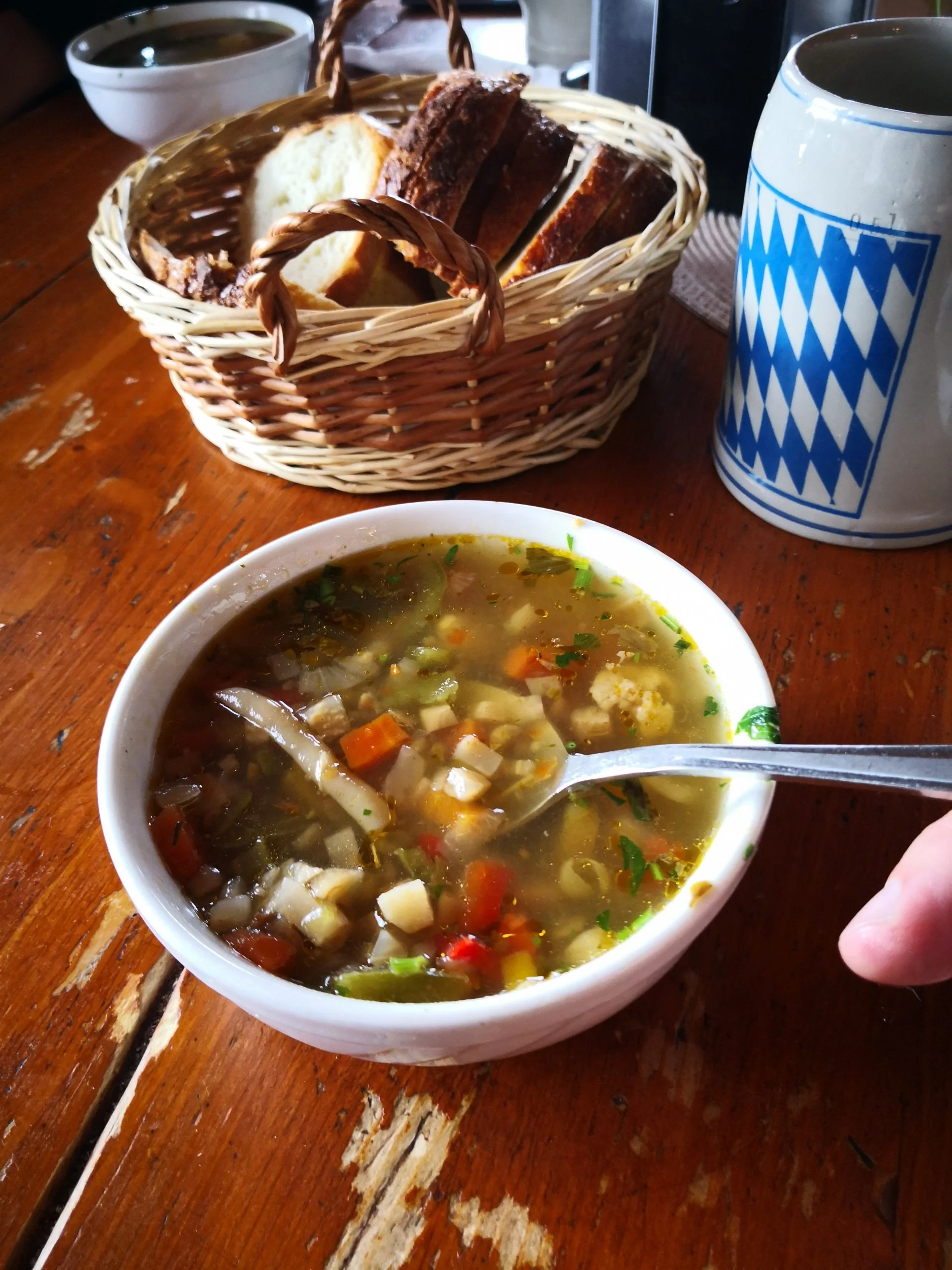
Ciorbă is a broad family of soups, often made pleasantly sour rather than creamy or heavy. A menu may offer ciorbă de văcuță with beef and vegetables, ciorbă de burtă with tripe, or a vegetable version. Different kitchens use different souring ingredients and seasonings, so the same name does not guarantee an identical recipe from one restaurant to another.
Tripe soup is particularly recognisable because it is often served with sour cream, garlic and a hot pepper. It is not for every traveller. If you prefer something lighter, ask about the vegetable soup or a chicken-based option. In Romania, a waiter will usually understand the difference between soup with meat and a vegetarian version, but it is sensible to ask about stock, eggs and dairy if your diet requires certainty.
After a chilly walk, a good bowl of ciorbă can be enough to make a modest mountain restaurant memorable. Bread is commonly offered alongside it, but may be charged separately. Check the serving size before adding several mains; traditional portions can be generous, and a soup followed by a heavy meat dish may be more than you expected.
Bulz, mămăligă and mountain cheeses
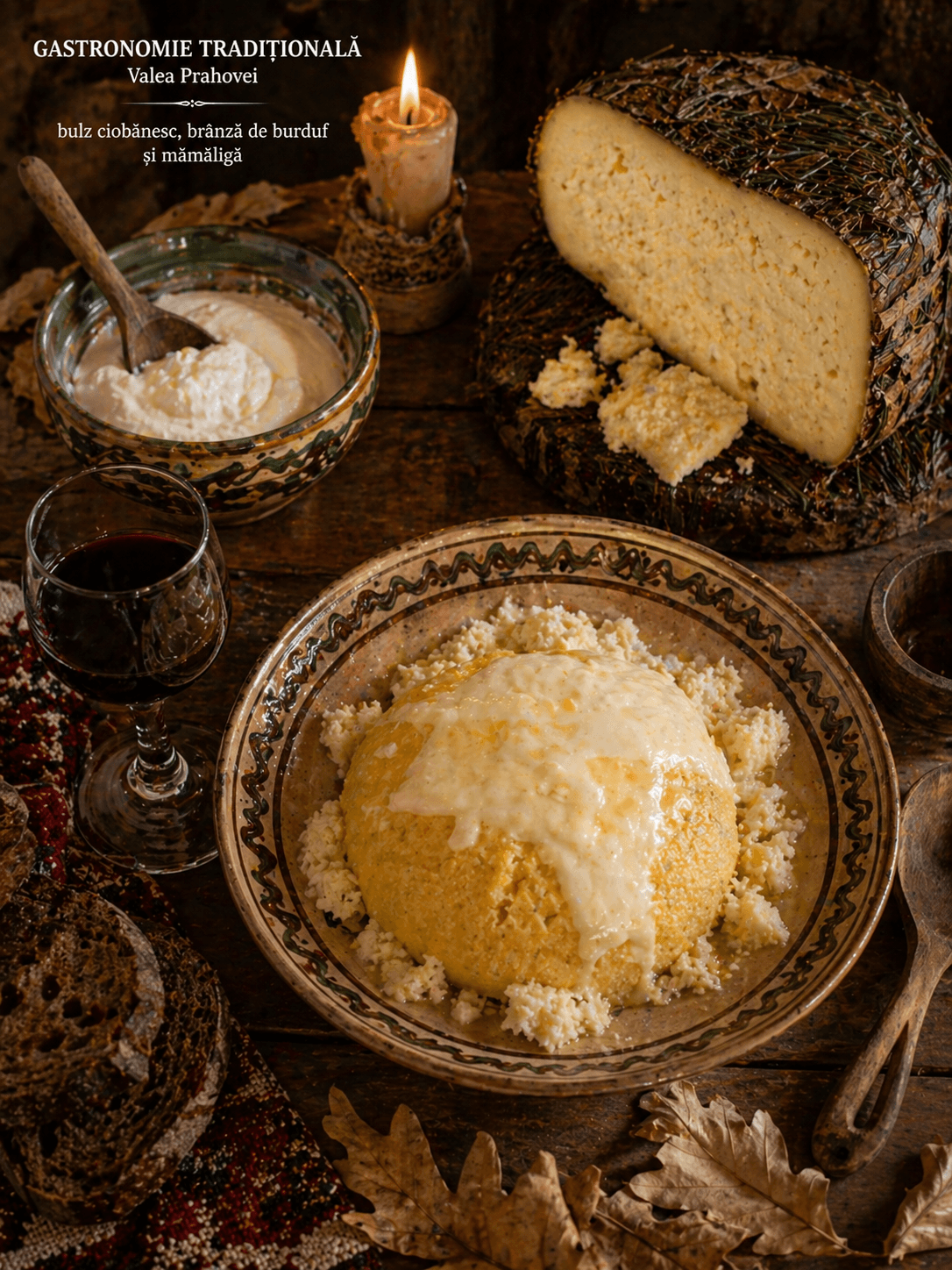
Mămăligă is made from cornmeal and can appear as a side dish or an important part of a meal. In mountain restaurants you may encounter bulz: a comforting combination of mămăligă and cheese, sometimes baked or grilled and sometimes enriched with egg, bacon or other ingredients. There is no single version served everywhere. The preparation often tells you something about the kitchen.
Brânza de burduf is a strong, salty cheese associated with mountain and pastoral food traditions. It can appear inside bulz or alongside mămăligă. If you are used to mild cheeses, ask about the flavour before choosing a dish dominated by it. Some versions of bulz are substantial enough for one person to eat as the main course rather than a side.
The difference between a carefully prepared regional dish and a generic tourist plate is often in texture and balance. Good mămăligă should taste of corn rather than simply act as a base for unlimited melted cheese. Ask how the restaurant prepares bulz if the description is unclear; a brief explanation can help you choose a version you will genuinely enjoy.
Sarmale and the dishes people order for celebrations
Sarmale are small parcels of cabbage leaves filled with a mixture that commonly includes minced meat and rice. They are slowly cooked and often served with mămăligă, sour cream and a hot pepper. Romania shares versions of this dish with neighbours across southeastern Europe, so it would be misleading to describe it as unique to one mountain valley. What changes from kitchen to kitchen is the filling, seasoning and style of serving.
Some restaurants use pickled cabbage, which gives the finished dish a distinctive tang. Others offer variations with vine leaves, and a vegetarian version may be available, though it should never be assumed. If you avoid pork or need a meat-free meal, ask directly about the filling. Traditional names do not automatically tell you every ingredient.
A plate of sarmale can be a good choice when you want a substantial dinner after sightseeing. It is also associated with family gatherings and holidays, which explains why visitors may encounter it on festive menus. The best introduction is a restaurant that cooks it carefully rather than one that promises a huge portion simply because it is popular with tourists.
Grilled meat, pastramă and simple mountain cooking
Romanian menus frequently include grilled meat, sausages and rustic platters. Mici, or mititei, are small grilled minced-meat rolls usually eaten with mustard. They are popular across Romania and work well as a straightforward meal if you are unsure about a longer menu. They are normally made with meat, so they are not suitable for vegetarian travellers.
Pastramă is cured or seasoned meat prepared in several ways. In some restaurants it is paired with mămăligă, cheese or pickles. The animal and method vary, and the name alone is not enough for a guest avoiding a particular meat. The most sensible question to ask is what the kitchen is serving that day and whether the dish is prepared to order.
Do not assume the most expensive mixed grill is the most representative choice. A modest portion of mici, a carefully prepared pastramă or a simple roast can say more about a kitchen than a huge board designed for photographs. Look for a menu that tells you what is included and allows you to order portions that suit the whole group.
Papanași, pies and a proper end to the meal
Papanași are among Romania’s best-known desserts. A common restaurant version consists of fried cheese-based dough served with sour cream and fruit jam, often blueberry or another berry. They can be very rich. Some kitchens serve two pieces as one portion, while others use a different size or preparation, so check before ordering separate servings for every member of the family.
Older regional baking traditions also include pies and pastries filled with cheese or fruit. A restaurant may serve plăcintă cu brânză, apple pie or a seasonal dessert rather than papanași. These foods are not restricted to Prahova Valley, but eating them after a mountain outing is part of a recognisable Romanian holiday experience.
Coffee, tea and hot chocolate have a practical role during cold weather, and a café stop can be as enjoyable as a formal restaurant lunch. When visiting with children, it is worth checking whether a dessert contains nuts, dairy or other ingredients relevant to allergies. A traditional name is not a substitute for asking staff about the actual recipe.
Choosing where to eat in Sinaia, Bușteni, Azuga and Predeal
Sinaia offers the widest mix of town-centre restaurants and hotel dining among the main resorts. It is convenient for a relaxed meal after exploring the park or returning from the royal quarter, though the uphill walk from Peleș can influence where you want to eat. A central restaurant near your hotel may be more useful than a beautiful terrace on the other side of town after dark.
Bușteni has restaurants around the town and in properties higher on the Zamora or Caraiman sides. If visiting Cantacuzino Castle, check whether the restaurant you are considering requires separate estate access or a booking. Some dining rooms have excellent views but limited seating, while other venues serve a simpler meal close to the railway.
Azuga is smaller, so it helps to choose a venue deliberately. Rhein has a historic restaurant alongside its cellars, but a cellar tour and a meal are separate arrangements. Predeal has hotel restaurants and independent options suited to walkers and winter visitors. In each town, search for opening times on the actual day rather than relying on an old blog article.
Eating well during winter, summer and the holidays
Winter restaurants can be crowded at lunchtime when people come down from the slopes. If you need a table for a large family or group, reserve in advance when the venue accepts bookings. A mountain-side restaurant may close when its lift or access road is not operating. Do not assume that a famous terrace will be open merely because snow conditions look good in town.
Summer brings more opportunities to eat outdoors, but mountain weather changes quickly. A covered terrace may be pleasant during light rain yet uncomfortable in wind. For a relaxed afternoon, choose somewhere with an indoor alternative rather than turning lunch into a race with the forecast. Menus can change with the season and the supplier, particularly for fresh ingredients.
Christmas and New Year are different from an ordinary weekend. Hotels may sell festive packages, restaurants can restrict tables to residents and set menus may replace à la carte dining. Ask about the complete price, service times and cancellation rules. It is especially important not to promise a visitor that a particular dish or table will be available on a public holiday without a confirmed reservation.
Vegetarian, allergies and eating with children
Romanian food offers satisfying vegetable dishes, but a menu name does not always reveal whether a soup contains meat stock, whether cabbage rolls include pork or whether a side dish has butter and cheese. Guests who need a vegetarian, vegan or allergen-controlled meal should tell staff clearly and ask about ingredients. Do not assume that an attractive salad is the only possibility.
A practical phrase is «Fără carne, vă rog» — without meat, please. For milk allergies, «fără lapte și produse lactate» is useful, though a more complete written allergy card in Romanian is preferable when a reaction could be serious. Staff may need to check with the kitchen. A cautious question before ordering is easier than discovering a problem when the food arrives.
Families should check portion sizes and whether a restaurant can provide simpler food for a young child. Strong cheese, sour cabbage and heavily seasoned meat may be unfamiliar. One shared soup and a familiar main can be more enjoyable than ordering several large speciality plates solely to try every item. Ask about high chairs or space for a stroller when making a reservation.
Reading a Romanian menu and paying the bill
Menus usually show prices in Romanian lei, abbreviated RON. Some items are sold by portion while others, especially meat or fish, may be priced by weight. Check the unit before ordering. A price displayed per 100 grams can result in a different final bill from a fixed plate price. Extra bread, sauces or side dishes may also be charged separately.
Cards are widely accepted in established resort restaurants, but carrying some cash is sensible in smaller places or during network outages. Check whether your card terminal offers a currency conversion and, if possible, understand the exchange rate before agreeing. Ask for the bill and keep the receipt; tipping customs vary and a service charge should not be assumed either included or excluded without looking.
If the restaurant is busy, allow time for freshly prepared dishes. The best lunch is not necessarily the quickest. Choose one main food experience for the day, particularly when you have a fixed train departure, and leave room for the rest of the trip. Our accommodation guides and seasonal pages can help choose a district where eating out is convenient.