
Sinaia Royal Train Station: History and Visitor Guide
Sinaia’s railway history includes royal reception buildings as well as the station used by travellers today. Discover how these buildings came about and what you can still see when you visit.
Why Sinaia has more railway history than one station building
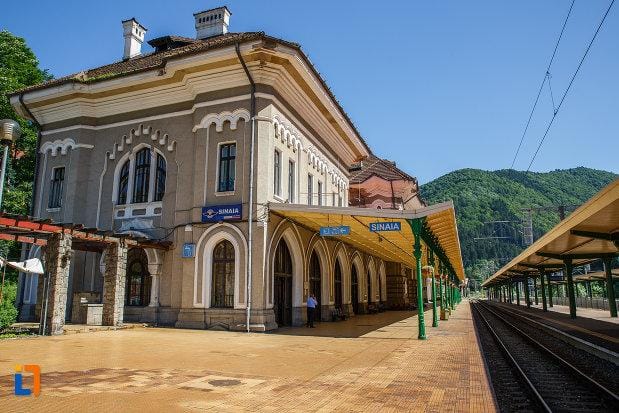
Sinaia is a working stop on the Bucharest–Brașov railway, but its station area contains architectural traces of several eras. Travellers normally arrive at the passenger building associated with the early twentieth century. Nearby are royal railway structures that tell a different story: the importance of Sinaia as a royal residence and the ways Romanian rulers travelled to the mountains.
It is useful to separate three distinct dates. The first passenger station opened in 1879 and included a reception hall for Prince Carol. A new main station opened in 1911, while the historic royal reception hall survived as a separate structure. Later, a special royal station was built under Carol II between 1938 and 1940. These are not three interchangeable names for one platform.
The visitor experience reflects that difference. The active station is a transport facility; the historic hall and later royal building are heritage sites whose interior access may vary. A photograph of a royal facade does not mean you can enter without booking, nor does a ticket to Sinaia give museum access.
The original 1879 station and Carol I
The railway’s arrival transformed Sinaia’s accessibility. In the nineteenth century, the settlement was becoming associated with the royal summer residence, and the train allowed travel from the capital to the mountain resort in a way that was far more predictable than older roads. The first station opened in 1879, with a hall set aside for receiving Prince Carol, later King Carol I.
That reception space was extended in the 1880s and survived when the main station complex was rebuilt. The separate royal hall is an intriguing reminder that railway design did more than move passengers: buildings could express ceremony, status and an emerging national identity. Visitors interested in architectural history can look for the relationship between the original hall and the later passenger station.
Do not assume that the surviving hall has the same visiting arrangements as the railway platforms. Historic articles have mentioned railway displays in the building, but current access and exhibitions should be confirmed separately. If it is closed when you arrive, appreciate the exterior from permitted public areas and continue your itinerary without entering restricted railway property.
The station used by today’s passengers
The principal passenger building that serves modern Sinaia dates from the redevelopment opened in 1911. It belongs to the everyday life of the town: commuters, visitors with suitcases, winter sports travellers and day trippers all use the railway. Many international visitors first see this part of Sinaia before walking towards Dimitrie Ghica Park or climbing towards the royal estate.
As a working transport hub, the station has rules that differ from a museum. Platforms, tracks and staff areas exist for active railway operations. Never cross rails or barriers for a photograph of a historic facade. The safe way to explore is through public pedestrian routes and clearly accessible spaces.
If you are taking a train rather than simply photographing the architecture, check the operator, train number and stopping pattern. Several passenger companies use the corridor. A ticket for the correct town but wrong service can cause trouble even if the railway buildings are easy to find. Leave enough time to locate your carriage before boarding.
The later Royal Station of Carol II
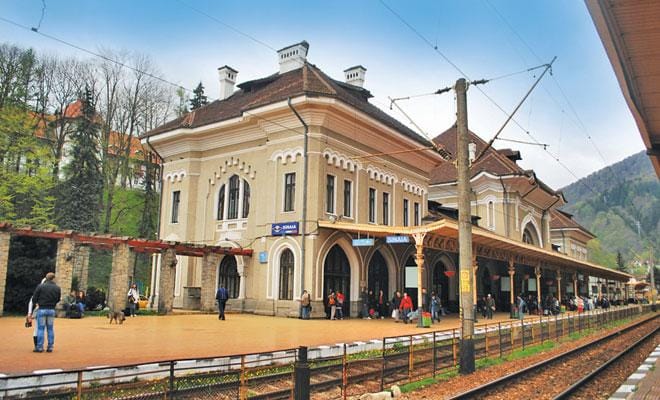
During the late 1930s, another royal railway building was created at Sinaia for King Carol II. The historical overview published by Historia dates this construction to 1938–1940, making it distinct from the original 1879 station and the passenger building of 1911. It reflects a later moment in the monarchy’s relationship with Sinaia and the development of ceremonial railway travel.
For travellers interested in railway heritage, the most rewarding part is recognising the different functions. A royal arrival space could prioritise ceremonial access and privacy, whereas the main passenger station needed to manage ordinary journeys and large numbers of travellers. Looking at the buildings side by side makes that contrast easier to understand.
Do not confuse proximity with visitor access. The existence of a royal building near the active station is not a promise of a guided interior tour. Check current permissions and any organised heritage openings. A brief exterior visit from lawful public ground is a different experience, and it is important to describe it that way.
Locating the railway heritage after you arrive
If you arrive by train from Bucharest, you are already at the correct general area. The station buildings sit close together in the lower part of Sinaia, though access between particular structures depends on the railway layout and any barriers. Start on the public side of the station and orient yourself before searching for a specific historic building.
A regional history article points out that a passenger approaching from Bucharest sees the newer royal building before reaching the main station. That is a useful visual clue, not a reason to leave the train early or cross the tracks. Wait until you have alighted at your scheduled platform, then use the official pedestrian exits.
Visitors driving to the station should check the municipal parking scheme instead of expecting to leave a car wherever space appears beside the tracks. Parking areas can have different purposes and tariffs. When collecting someone from a train, agree on a lawful meeting point accessible from the correct station entrance rather than standing on a busy access road.
Can you go inside the royal rooms?
Interior access is the detail most likely to be overstated in travel guides. Historical descriptions mention a surviving royal reception space and railway exhibits, but that does not guarantee a museum with daily opening hours in 2026. If you specifically want to see the inside, contact the relevant heritage or railway operator and ask about current visiting arrangements, reservations and any photography restrictions.
If the building is not open, the station area still makes sense as a short stop while passing through Sinaia. You can appreciate the architecture from permitted public places and then continue towards the town. Avoid scheduling a long day around an interior tour that has not been confirmed.
The same caution applies to special royal trains or heritage railway events. A preserved locomotive, railway exhibition or ceremonial train may appear in older photographs, but its presence on a specific date must be verified. Describing the history and promising a particular attraction are two different things.
Combining the station with Sinaia’s other heritage
The station is a natural starting point for a heritage walk. Dimitrie Ghica Park is nearby in the central part of town, while Sinaia Monastery and the royal estate sit farther uphill. The route from the railway level to Peleș Castle involves a climb, so a person travelling with luggage or who has limited mobility should assess the actual pedestrian route rather than the straight-line distance on a map.
You do not need to see every building in one afternoon. A short station-area visit, time in the park and lunch can be a satisfying start before an overnight stay. For a longer cultural day, plan the monastery and royal area around their own opening conditions. Peleș Castle has announced occasional conservation closures, and a ticket to the museum is separate from access to the station’s historic buildings.
For travellers who prefer mountain scenery, a gondola visit requires another journey to a lower lift station. The cable transport does not board from the railway platform. Check the operating status and leave enough time for the return journey.
Making your rail journey part of the visit
Sinaia is served by the Bucharest–Brașov railway corridor. It can work well for international visitors staying in Bucharest and travelling to the mountains without hiring a car. The train ride through the Prahova valley offers views of forested slopes, resort buildings and the mountain landscape. However, different operators use the line, and not all trains have the same stopping pattern.
Search the exact date and train through a national timetable or authorised booking site. Check both outward and return departures, especially for a day trip. The ticket’s operator, date, class and reservation terms matter more than the broad label “train to Brașov”. If you plan to continue to Bușteni, Azuga or Predeal, verify that the connecting train stops where you need it.
A railway-based visit also avoids some weekend road congestion, though the station-to-hotel transfer may still require walking uphill or taking a taxi. Our ticket guide explains that final distinction.
Photographing the buildings with care
Railway heritage is often most interesting in the small details: rooflines, entrance proportions, masonry and the way the ceremonial buildings differ from the practical passenger hall. Take time to look rather than photographing every facade from the same angle. A clear picture that shows the relationship between the buildings is more useful than an isolated close-up without context.
Remember that this is an active railway environment. Platforms and trackside spaces can be restricted, and movement of trains creates serious hazards. Do not step onto a track, climb a barrier or lean into an operational area to frame a photograph. Follow station staff instructions and respect any signs prohibiting photography in a particular area.
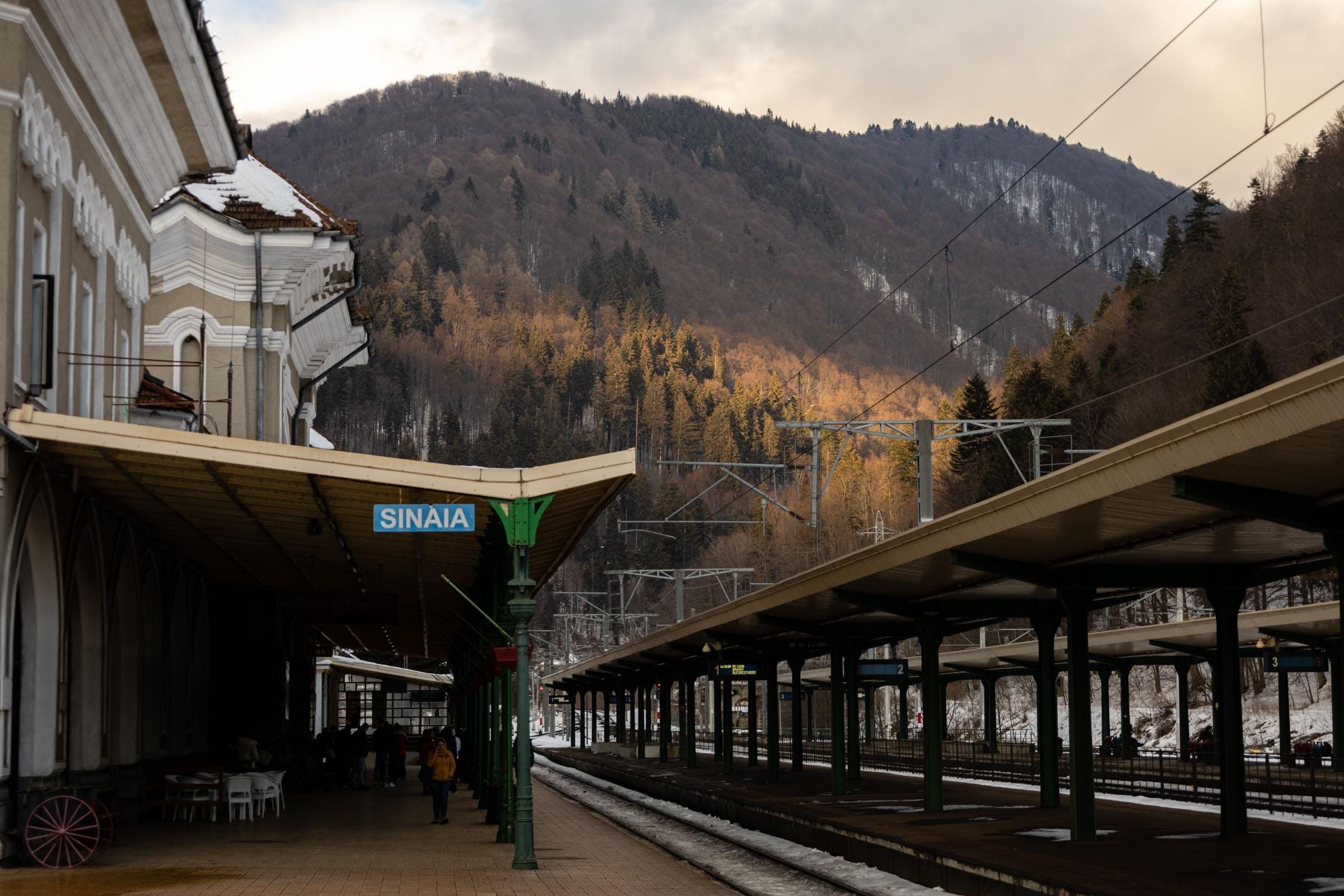
Seasonal light changes the atmosphere. In winter the surrounding slopes may be snowy while the station itself remains busy. In summer the buildings can be enjoyed during a slower town walk. There is no reason to treat the area as a hurried checklist stop, particularly if you are waiting for a return train.
Practical questions before visiting
If railway heritage is your main reason for coming, confirm which of the historic buildings are open and whether guided entry is possible. Ask specifically about the royal reception hall and the later royal station; those are not automatically one ticketed attraction. Do not rely on a museum review written many years earlier for current hours.
For travellers arriving with children, explain the difference between looking at a historic building and entering an active railway platform. Keep children close and use designated pedestrian passages. For anyone needing step-free access, contact railway services about the route from the train to the public exit, and separately check any heritage building you hope to enter.
Finally, leave time for the rest of Sinaia. The station provides a valuable introduction to the town’s royal history, but the experience is most meaningful when paired with a sensible town walk. Our station-to-Peleș guide covers the uphill continuation, while the day-trip itinerary helps organise the return.
History and practical information
Historic interior access may vary. Confirm visits before travelling specifically for an exhibition.