
Paltinu Lake and Dam: A Day Trip to Valea Doftanei
Paltinu Lake lies among the wooded hills of Valea Doftanei, away from the busy mountain resorts. Visit for the scenery and nearby villages, but don’t treat the reservoir as a designated swimming area.
A reservoir beyond the resort railway
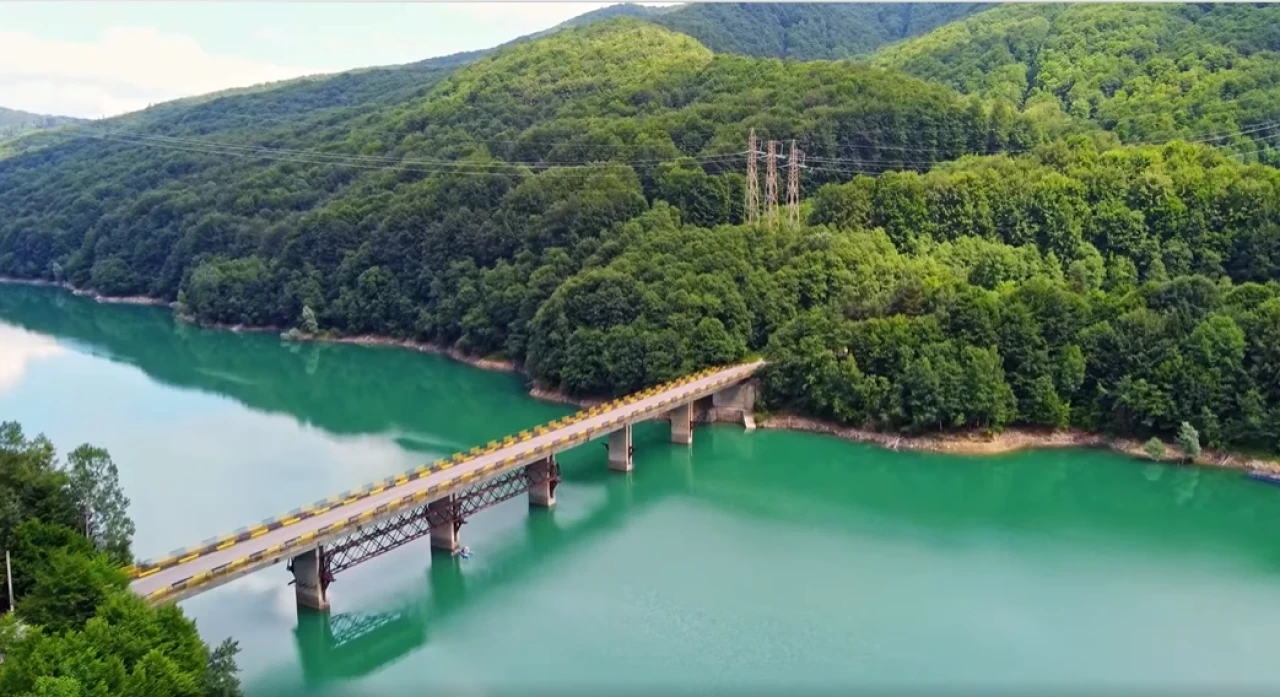
Travel north from Câmpina into Valea Doftanei and the atmosphere changes. Instead of the closely spaced stations of Sinaia, Bușteni, Azuga and Predeal, the road follows a more rural valley. Paltinu Lake appears between wooded slopes, with the dam adding a dramatic engineering element to the landscape.
The lake is a rewarding excursion for travellers seeking scenery without the busiest resort infrastructure. It is not, however, a quick walk from the Bucharest–Brașov railway. Public transport to the wider valley must be checked locally, and anyone without a car should arrange a return transfer rather than assume a frequent tourist service. A well-planned day allows time for viewpoints, the gorge and lunch in a nearby village.
Choose Paltinu because you want the countryside. It is not sensible to combine it casually with a full interior tour of Peleș Castle and a high mountain lift ride on the same short afternoon.
Why this is not an ordinary swimming lake
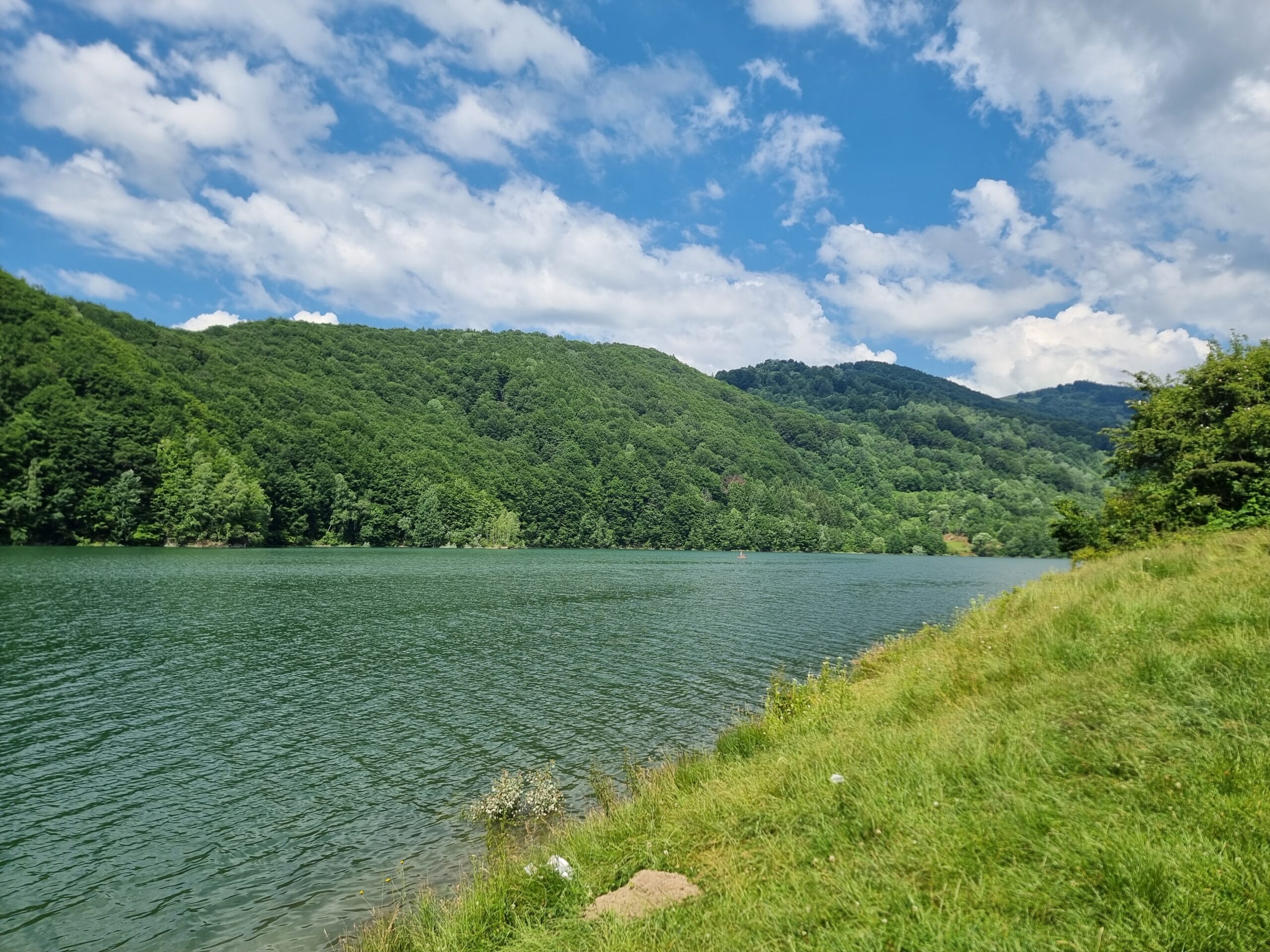
The Valea Doftanei commune’s tourism information identifies Paltinu Lake and the dam among the area’s main attractions. The water stretches through a long wooded valley, changing colour as the light and weather shift. The setting is peaceful, but the reservoir is working water-management infrastructure, not a designated recreational beach with unrestricted shores.
Depth, currents, steep banks and operational restrictions are not obvious in photographs. Do not infer permission to swim, fish or launch a boat merely because the surface looks calm. Different activities may require formal authorisation. Respect gates, barriers and warning signs around the dam, and do not walk onto service roads or technical structures without permission.
For many visitors, watching the light move across the water from a safe public viewpoint is the highlight. You need neither a difficult hike nor access to the water’s edge to appreciate the lake.
The route through Câmpina
The practical road approach runs through the Câmpina area towards Teșila and Trăisteni. Drivers arriving from Bucharest should account for both the approach to Prahova and the slower rural stretch. Visitors staying in Sinaia or Bușteni must make a separate road detour away from DN1. There is no single fixed journey time that works during weekend traffic, snow or road maintenance.
Check the route close to departure and keep an offline map. Petrol stations and restaurants are not as frequent as in the central resorts, particularly if you continue beyond the lake. In wet or icy weather, some shaded bends may require additional caution. Do not let an attractive travel photograph distract from the actual road conditions on the day.
Roadside photography is best handled from a legal parking space. A narrow bend or an access road serving the dam is not an acceptable place to leave a car, even if it provides a dramatic view.
Finding a safe place to enjoy the view
Different roadside and elevated viewpoints show the water as a long ribbon between the hills or bring the dam into the foreground. Soft morning light can create reflections; later in the day the forest may develop richer contrast. There is no single compulsory location for every photograph.
Do not cross private land, climb barriers or scramble down steep banks to reproduce an image found online. Reservoir margins can be loose and wet, and a short path may end at a hazardous drop. Wear shoes with good grip, stay where access is allowed and keep children away from the water’s edge. If a viewpoint is crowded or parking is unsafe, continue to a better stopping place rather than improvising.
Travellers with reduced mobility should investigate the exact surface at a chosen overlook. Being close to a road does not guarantee level ground, accessible toilets or step-free access. A carefully chosen panorama viewed from a safe stopping place may be the best option.
The dam deserves respect as well as admiration
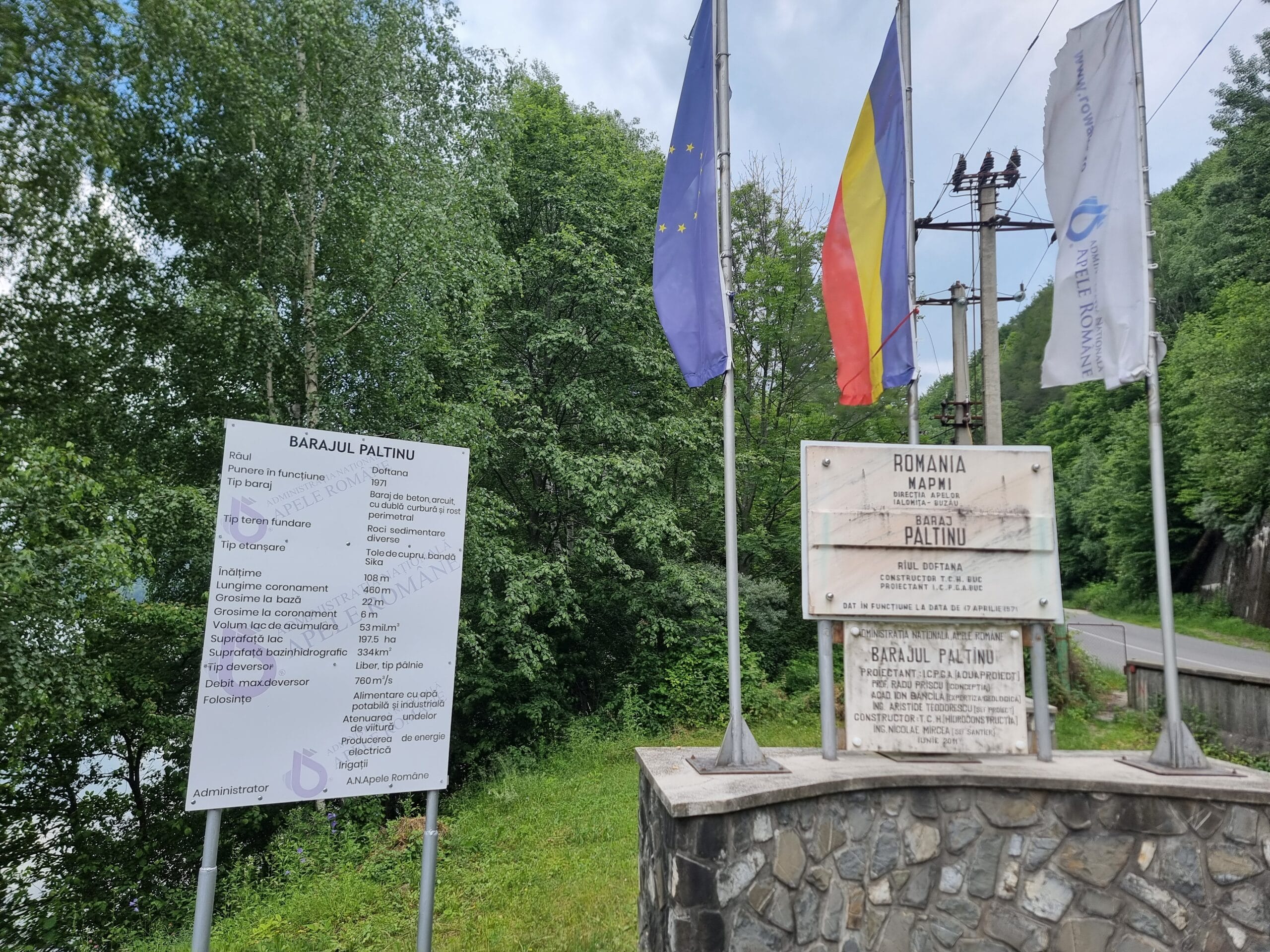
The Paltinu dam is impressive because it has a practical purpose. It is not simply a scenic sculpture placed at the end of a lake. Working water infrastructure may have restricted access, service routes and areas where tourists must stay behind barriers. Follow local signage and any directions from staff; do not assume that an open-looking gate or roadway is intended for visitors.
Explaining the dam’s role in the valley can make the outing interesting for older children. From authorised viewing points, look at the scale of the concrete structure and the way the reservoir sits behind it. Avoid approaching machinery or climbing over rails for a photograph. A clear, safe vantage point is usually enough to understand the site.
If access is limited during maintenance or other work, treat that as normal operational practice. There is still much to see in the surrounding landscape, and no need to search for an unofficial entrance.
Cheile Doftanei and the way north
The Doftana Gorge is another attraction identified by the commune, along the approach from Câmpina. Hard rock formations create a narrower scene than the open reservoir. The contrast makes it a natural pairing with the lake if road and parking arrangements allow. It need not become a long walking expedition.
A scenic roadside stop is not the same as a marked footpath through every part of the gorge. Watch for traffic on narrow sections and choose a safe pull-off. Wet rocks and natural banks can be slippery, particularly after rain or when temperatures fall below freezing. Do not block the road or enter restricted areas in pursuit of a particular composition.
Allow the weather to decide how long you stay. On a dry day you might enjoy a second viewpoint before lunch. In heavy rain, it is better to continue without stopping than to risk an uncomfortable or unsafe approach.
Teșila and Trăisteni
Valea Doftanei includes the villages of Teșila and Trăisteni, where the region’s appeal continues beyond the reservoir. Local houses, rural guesthouses, food traditions and the surrounding forest give visitors a sense of everyday life in this part of Prahova. Travel respectfully: private yards, farmland and village lanes are not automatically open tourist attractions.
The commune lists places of interest including old church ruins near Trăisteni and the Glodeasa forest reserve. Both require their own research before a visit. A historic ruin may be fragile and a protected forest may have access rules, so do not improvise a route or enter unstable structures because a map indicates something interesting nearby.
A countryside meal can become a memorable part of the day. Check whether the venue is open and whether reservations are necessary. A small rural restaurant may not keep the same schedule as a large hotel in Sinaia.
Children, weather and the return journey
Paltinu can work for families who enjoy scenic drives and short walks, provided the plan uses safe viewpoints. Keep children close near roads, steep banks and water. Pack snacks, water, a rain layer and footwear suitable for damp ground. Do not build the outing around unverified swimming or boating.
Summer offers longer days; autumn brings striking forest colours but less daylight. Spring weather can change quickly, and winter introduces icy roads and slippery viewpoints. Check the forecast for the actual valley, not only a general forecast for Bucharest. Give yourself time to return before dark if you are unfamiliar with the roads.
If you choose accommodation in Valea Doftanei, ask about the final access road, parking, heating and proximity to food or shops. A quiet rural property can be rewarding but may require more transport planning than a central resort hotel. Our Valea Doftanei guide covers the broader area.
How to build a day around the lake
The most common planning mistake is to treat Paltinu as a brief detour between two unrelated destinations. The drive into Valea Doftanei is worthwhile because the scenery changes gradually, not because there is one single platform where everyone must stop for five minutes. Begin early enough to enjoy the approach, choose a safe place to photograph the water and then decide whether the gorge or a village lunch fits the remaining time.
If you are staying near Câmpina, the lake can be part of a comfortable half-day. From Sinaia or Bușteni, however, you need to account for the additional road journey. A full afternoon spent visiting castles or mountain lifts leaves little space for the Doftana valley. Keep the two sorts of travel day separate rather than trying to collect locations at the expense of enjoying them.
Work backwards from the time you want to return, particularly in autumn and winter. Roads may be darker and slower than expected after sunset. An extra hour at a café can be pleasant, but a surprise night drive on unfamiliar rural roads is less so. Let your day end before the schedule becomes an obligation.
Food and small stops beyond the water
The lake is not the only reason to enter Valea Doftanei. The villages around it have guesthouses and places where travellers can discover local cooking, though opening hours and kitchen arrangements vary. If you have a particular restaurant in mind, contact it before travelling instead of assuming it will serve lunch all afternoon. Small rural venues may operate with reservations or reduce their programme outside weekends and holidays.
Bring enough water and a few snacks even when you intend to eat out. A late arrival or an unexpectedly closed kitchen should not force you to search for food on a remote stretch of road. For a family, a simple picnic can be pleasant at a place where it is permitted; carry every wrapper and container back with you. Food scraps attract animals and make natural viewpoints less enjoyable for the next visitor.
Allow time to look at the village itself rather than making lunch just another rushed stop. The houses, working farms and changing landscape tell a quieter story about Prahova than the busy resort promenades. Respect local residents, their property and the roads they use daily.
Wildlife, water and environmental care
The hills around the reservoir are part of a living environment. You may notice birds, forest animals or signs of wildlife along the road and near quieter paths. Enjoy them from a distance. Do not leave food to attract animals or pursue wildlife for photographs. A roadside animal is not a reason to stop dangerously in traffic or wander onto private land.
Protecting the reservoir means more than keeping the view attractive. The water is part of an important managed system, and litter or unauthorised activity can have consequences beyond tourism. Take rubbish away, avoid disturbing vegetation and respect any restrictions on access to the shore. Do not light fires or camp in an unapproved area merely because you see a grassy clearing.
Visitors often assume a countryside stop has fewer rules than a formal park. In practice, the opposite can be true: property boundaries, water infrastructure and conservation needs may make access complicated. When an area is fenced or signed, choose another viewpoint. You can appreciate the place without needing to enter it.
Photographing the landscape without unsafe shortcuts
For photography, the strongest images usually combine the water with the surrounding hills. Look for safe elevated perspectives rather than moving down a steep bank to the reservoir edge. A wide scene tells the story of the valley more effectively than a close-up of water alone. Changing clouds can produce striking colours, so patience may matter more than the number of viewpoints visited.
Check whether your chosen stopping place leaves a clear space for vehicles and pedestrians. A bend where cars travel quickly is not a photographic platform, however tempting the view. Never stand in the carriageway or stop in front of a service gate. If the shoulder is narrow, keep driving until a safer location appears. A photograph is never worth an accident.
Late-day light can be attractive but may leave less time for the return. Take the best photographs early in the visit rather than committing to a last viewpoint at dusk. If you are travelling with other people, give them the chance to enjoy the lake without spending the entire afternoon watching someone else change camera settings.
What if weather or access makes the lake difficult?
Heavy rain, snow or ice can make the rural approach unpleasant. If conditions are poor, it is sensible to change the itinerary rather than insist on reaching the dam. You might choose a town attraction near your accommodation or postpone the countryside outing. The lake will still be there on another day, while dangerous driving or walking surfaces can turn a holiday into a problem.
There is no single guaranteed indoor attraction at the reservoir that replaces outdoor sightseeing. An open restaurant may offer shelter, but it should be contacted rather than assumed. If you are staying in Sinaia, options in town may be easier to reach. If you are near Câmpina, look for currently open local cultural attractions and keep the journey shorter.
For someone travelling without a car, a sudden change in weather also affects the return transfer. Agree the pickup conditions in advance, keep the driver’s contact details and avoid walking along unlit roads to seek a signal. Flexibility makes Paltinu a rewarding day trip; an inflexible schedule can make even beautiful scenery feel like a chore.
Useful sources
Check current access and road restrictions. The dam is working water infrastructure.